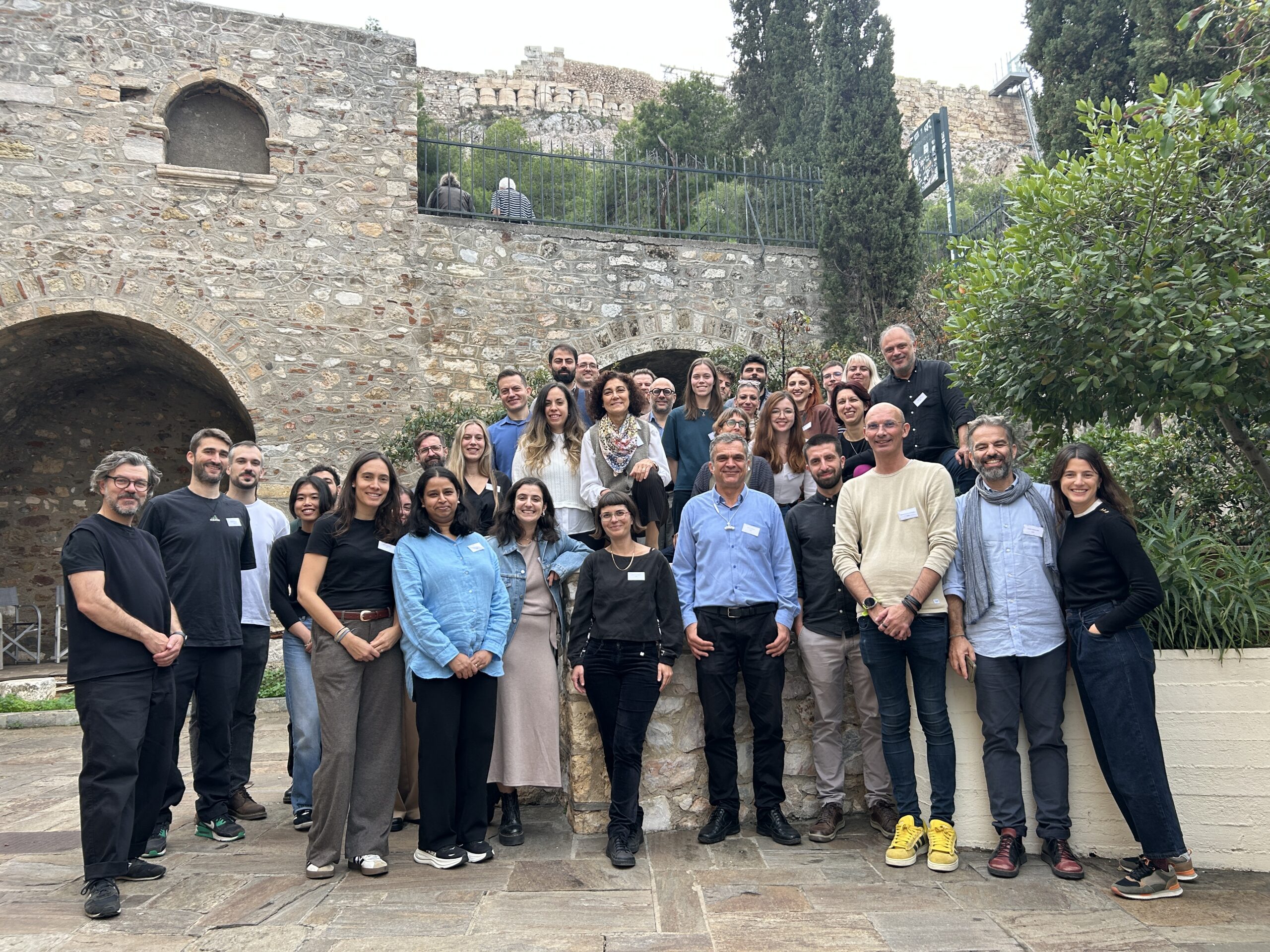
In November, the DELICIOUS consortium gathered for its second in-person meeting in a truly unique location — the Athens University History Museum, nestled on the northern slope of the Acropolis. The museum, located in one of the oldest residential buildings in Athens, offered an inspiring setting steeped in history and knowledge. Once home to the first University of the modern Greek state (1837–1841), it now houses important relics of academic heritage.
Our wonderful host for the meeting was our Greek partner, the @University of Athens.
Looking back to move forward: Project Progress and next steps
The Athens consortium meeting offered a space for all partners to reflect on progress and synchronise plans for the coming year.
Discussions covered all work packages, with updates ranging from microbial ingredient development and biomass processing to prototype formulation and sensory testing.
The consortium shared promising advances in the production of microbial fats, flavours, and texturising compounds, and early plant-based cheese and kefir formulations are beginning to take shape.
The development of a predictive bioinformatic tool also continues to advance, aiming to forecast the sensory performance of products based on fermentation inputs.
In WP5, we explored how consumers and culinary experts perceive plant-based dairy alternatives. Communication and stakeholder outreach have gained momentum too, with a growing digital presence and clear plans for dissemination.
The meeting concluded with an open discussion on next steps, upcoming deliverables, and collaborative goals for 2026.
A sensory Journey with AINIA
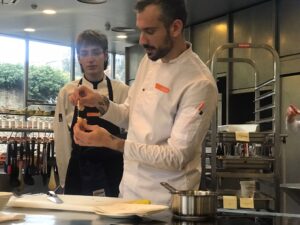
One of the most engaging parts of the meeting was a hands-on Sensory Analysis Workshop organised by our partner @AINIA. Participants took part in a series of interactive exercises designed to explore the senses and deepen our understanding of flavour perception. Here’s what we did:
EXERCICES:
- 1. Gustatory vs. Olfactory Perception
We placed the content of aroma capsules in our mouths, first with our noses pinched, then open, highlighting the crucial role of smell in taste perception. - 2. Basic Tastes
We tasted various liquids to identify the five basic flavours: sweet, acid, bitter, salty, and umami. - 3. Genetic Taste Differences
A simple paper strip test helped us experience individual variations in taste perception, some found it intensely bitter, others tasteless! - 4. The Odour of Money
We compared the scent of coins laid on the table versus when handled directly, observing how perception changes with physical interaction. - 5. Dairy Odours
Butter, milk, dulce de leche, and cooked milk were presented for olfactory analysis, triggering both memory and descriptive skills. - 6. Fermentation Odours
We explored aromas typical of fermentation processes: Apple vinegar, alcohol, roquefort, cottage cheese. - 7. Off-Flavours
A less pleasant but highly educational session, featuring smells reminiscent of rancidity, chlorine, humidity, and white pepper. - 8. Texture Perception
We evaluated how different food samples coated the mouth lining and differed in particle sensation and fullness. - 9. Consumer Testing
We sampled two types of kefir ( dairy vs plant-based), rated them, and filled out structured questionnaires, simulating the consumer testing that will soon be part of the project. - 10. Quantitative Descriptive Test
We acted as trained sensory assessors, evaluating three cheese samples based on a defined list of sensory attributes and intensity scales via a digital app.
Watch the Highlights
As the saying goes, a picture is worth a thousand words. Here’s a short video recap of our time together in Athens.